1
A 1905 postcard from
Long Beach captures the vibrant essence of the growing Southern California seaside community. Featuring the shoreline, local landmarks, and scenes of leisure, it highlights Long Beach as an attractive destination for both tourists and residents. Multiple members contributed to Long Beach's development, most notably
Jotham Bixby, who was one of the original developers and became known as “The Father of Long Beach.”
2
Roscoe Turner, Jonathan Club member, was a pioneering aviator known for his daring flights and vibrant personality, making him a key figure in early aviation. Celebrated for breaking records, Turner helped shape commercial aviation, inspiring future aviators. He had his own "flying circus," becoming an emblem of the era's aviation culture. His achievements highlighted the excitement of flight and left a lasting legacy in the history of American aviation.
3
A crate label from the
Earl Fruit Company, dating back to circa 1900-1909, featuring vibrant poinsettias, serves as a captivating example of the era's agricultural marketing artistry. Member
Edwin T. Earl joined his family business (Earl Fruit Company) and later in 1890, invented the first successful ventilated and refrigerated car specifically designed for fruit transportation. By 1900, the Earl Fruit Company became the largest fruit shipper in the world.
4
A stamp featuring
Robert Millikan, part of the Great Americans Series, honors the physicist and Nobel laureate's enduring legacy. Issued by the California Institute of Technology, where Millikan served as president for 25 years, the stamp celebrates his contributions to physics, including his 1923 Nobel Prize and his work on jet propulsion during World War II. It highlights his lasting impact on science and education, inspiring future generations. Millikan was also a member of Jonathan Club.
5
A 1949 Time magazine cover featuring member
Harold Lloyd, celebrates the silent film star’s innovative contributions to cinema. Known for his horn-rimmed glasses and daring stunts, Lloyd’s blend of humor and adventure made him a key figure in Hollywood. The cover reflects both nostalgia for classic cinema and the evolution of American comedy, honoring his legacy while highlighting his enduring influence on modern film and comedy.
6
Lillian Russell, a celebrated actress and singer, was a star of the late 19th and early 20th centuries. Known for her captivating performances in comic operas and musical comedies, she dazzled audiences with her powerful voice and beauty, earning the title of “The American Beauty.” Her legacy in the performing arts helped shape the entertainment culture of her era and paved the way for future generations of artists. Throughout her career, Russell was managed by Jonathan Club member
Lynden Behymer.
7
A landmark piece by
Peter Alexander, resident artist of Jonathan Club, celebrates Los Angeles’s cultural heritage. Commissioned by the Automobile Club, the artwork features vibrant colors and dynamic forms, capturing the spirit of a transforming Southern California. Peter Alexander was given membership in exchange for many artworks featured at both the Town and Beach Club.
8
Jonathan Club member
W.R. Hearst’s “camp” at San Simeon, later known as Hearst Castle, symbolizes early 20th-century opulence. Reflecting Hearst’s extravagant lifestyle, the castle was built on 240,000 acres of land. Perched along the California coastline, the estate was designed as a lavish retreat, with grand architecture, stunning gardens, and a vast art collection. The castle became a cultural landmark, attracting visitors and celebrities, and remains an enduring symbol of California’s history and the
Gilded Age's excesses.
9
An 1897 poster for
La Fiesta de Los Angeles captures the city's vibrant spirit and cultural heritage. With colorful imagery and ornate typography, it invites attendees to join in a celebration filled with music, dance, and community pride. The event honored the city's Mexican heritage and showcased traditional customs, fostering unity among Angelenos. Jonathan Club member Thomas E. Gibbon was an active organizer of the first Fiesta held in Los Angeles. Other contributing Jonathans include
Hancock Banning,
John H. Dockweiler,
William May Garland,
James B. Lankershim, and more.
10
An image of
Signal Hill showcases the landscape and historical importance of this iconic site overlooking Long Beach, California. Once central to the area's oil boom, Signal Hill played a key role in Southern California's early 20th-century economy. Known for its history as a signaling point for ships and its ties to the oil industry, it embodies California’s growth and transformation. Signal Hill was bought by member
Edwin Jessop Marshall, and ultimately grew into the largest independent oil company in California.
11
A dinner menu from the
Wine and Food Society of Southern California at the Bel-Air Hotel highlights the group’s elegance and culinary excellence, featuring creative, member-prepared dishes that celebrate local ingredients and sophisticated dining. Set in the luxurious hotel, the event blends gastronomy and camaraderie, showcasing the society’s commitment to Southern California’s vibrant food culture.
12
Grafton Pettis Tanquary Jr., born in Los Angeles, attended USC before earning an MBA with Distinction from Harvard Business School. An esteemed member of Jonathan Club, Tanquary served on its board and played a key role in enhancing the club's legacy by curating photographs, artwork, and selecting the prints in the Grill. Many of Grafton's photographs can be seen in the Beach Club, mainly in the Penthouse. His contributions reflect both his dedication to the club’s heritage and his appreciation for art and community.
13
An 1885 map of the
Fort Hills tract offers a detailed glimpse into Southern California's development during a key period in its history. It highlights property boundaries, landmarks, and emerging infrastructure, reflecting the late 19th-century real estate boom and settlers’ ambitions. As a historical document, it captures the physical landscape of Fort Hills and provides insight into the urbanization and economic growth that shaped Los Angeles and its future neighborhoods.
14
Abraham Lincoln, the 16th U.S. president, led the nation through the
Civil War and worked to end slavery. Born in 1809 in Kentucky, Lincoln rose from humble beginnings to issue the
Emancipation Proclamation in 1863, paving the way for abolition and preserving the Union. Jonathan Club member
Major General Henry Lawton enlisted in the Army in 1861, just three days after Lincoln's first call for volunteers. His speeches, including the
Gettysburg Address, and his legacy as a symbol of freedom remain central to American history.
15
An early Spanish map, or diseño of the ranchos offers a fascinating window into California's agricultural and cultural landscape during the
Spanish colonial era. These intricate documents delineate rancho boundaries, feature landmarks, and depict land use, livestock, and flora, reflecting settlers' ties to the land. As historical artifacts, diseños reveal the influence of Spanish colonialism on California's development and provide insights into the roots of its agricultural heritage and the enduring legacy of the ranchos.
16
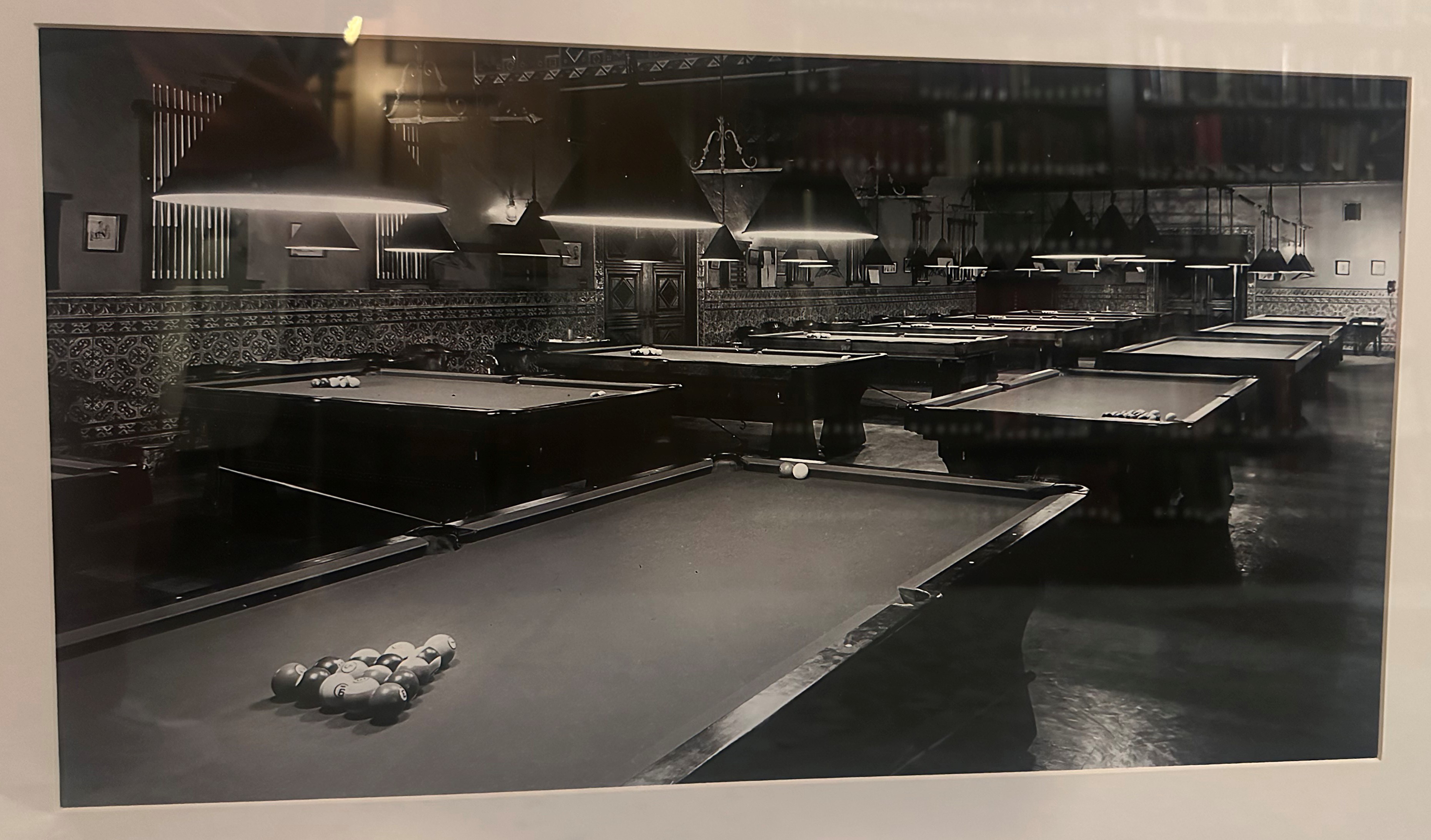
A photograph of
Willie Hoppe in the
Jonathan Club Game Room in the 1930s captures a moment in billiards history, highlighting Hoppe as one of the greatest pool players of all time. The image reflects the club's vibrant social scene of the era and Hoppe's influence on popularizing billiards in America.
17
Edward Arnold was a distinguished actor whose career spanned from the silent film era to Hollywood's golden age. Known for his versatility, he earned acclaim in both drama and comedy, with notable roles in
The Devil and Daniel Webster. Arnold’s ability to portray complex characters made him a leading man of his time, leaving a lasting impact on American cinema.
18
Rudolph Valentino's role in
The Sheik (1921) helped cement his status as a legendary silent film icon and timeless symbol of romance. His magnetic presence lit up the screen—made even more memorable by the Arabian horse he rode, which came from the stables of Jonathan Club member
Will Keith Kellog. The film was produced at Paramount Studios by fellow member
Jesse Lasky.
19
A photograph of
Roscoe Turner, member, embodies the spirit of this flamboyant early 20th-century aviator, celebrated for his record-breaking flights and contributions to commercial aviation. Known for his daring exploits and signature scarf and goggles, Turner became a symbol of aviation's excitement and innovation, inspiring a generation of aviators and enthusiasts while shaping the future of American aviation. Throughout his career, Turner was sponsored by fellow member
Earl Gilmore, founder of Gilmore Oil Company. Turner famously flew 30,000 miles with a lion cub named "Gilmore" as his copilot.
20
A menu from a
Wine and Food Society of Southern California dinner honoring
Winston Churchill at the Windsor Restaurant showcases a refined celebration of culinary artistry and historical tribute. Featuring gourmet dishes and fine wines in a sophisticated setting, the event united enthusiasts in appreciation of gastronomy and Churchill’s enduring legacy, reflecting the society's dedication to vibrant culinary culture and honoring influential figures.
21
El Miradero, the 1920s Glendale estate of
L. C. Brand, Jonathan Club member, blends Mediterranean and Spanish Revival styles, featuring ornate details, lush gardens, and scenic views. Built as a luxurious retreat by the prominent businessman and philanthropist, it also served as a social hub for influential figures, reflecting Southern California’s vibrant cultural spirit. Today, it stands as a cherished landmark symbolizing Glendale’s rich heritage and Brand’s enduring legacy.
22
The Congressional Medal of Honor, the USA's highest military decoration, recognizes extraordinary bravery and sacrifice in combat. Several Jonathan Club members have been recipients of different Medals of Honor, including
Henry Lawton,
Goodwin Knight,
Admiral Isaac Kidd, and
John Alexander McCone. Jonathan Club continues to honor recipients through events celebrating their valor, reflecting the club's civic pride and deep respect for those who embody heroism and national ideals.
23
Member
Jesse Lasky's Santa Monica home embodied the elegance of early Hollywood’s elite, serving as both a luxurious retreat and a social hub for film industry pioneers. Reflecting Mediterranean-inspired architecture, it symbolized Lasky’s success as a Paramount Pictures co-founder and a founder of the Academy of Motion Picture Arts and Sciences in 1927.
24
Henry Dockweiler ran many businesses including Mammoth Lager Beer Saloon which was a vibrant social hub in a rapidly evolving Los Angeles. This spot offered locals and travelers a welcoming space for drinks and lively conversation. His son, Jonathan Club member
John Henry Dockweiler, served as City Engineer and City Surveyor where he built the city’s first outfall sewer and was instrumental in transferring the city’s water supply from private to municipal ownership.